•  
Blood Donation in Bardarash Iraq

Blood Donation in Bardarash Iraq

An organizer works at his desk under the Kurdistan flag during the blood donation campaign in Bardarash, Iraq, on August 26, 2025. The organization Blood Donation and Life, under the slogan “A drop of blood gives a stream of life,” in coordination with Havar Bardarash Hospital, organized a blood donation campaign for thalassemia patients and pregnant women. The initiative, held in the Bardarash district center, collected more than 50 bottles of blood from government department staff. Organizers announced that they plan to donate about 100 bottles of blood weekly to the blood collection center. Photo by Showan Sulaiman Ali/Middle East Images/ABACAPRESS.COM

  •  
Water Shortage Raises Health Risks - Khan Younis

Water Shortage Raises Health Risks - Khan Younis

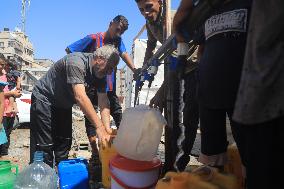
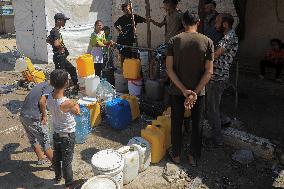
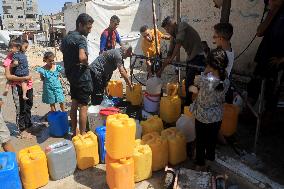
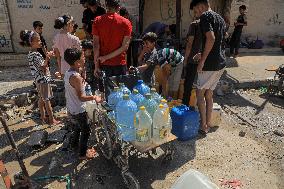
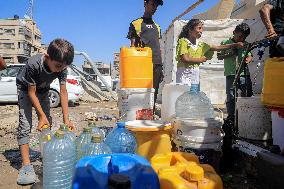
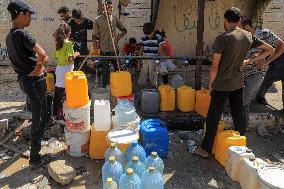
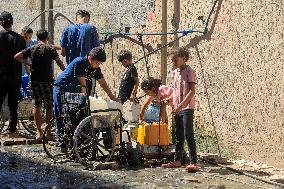
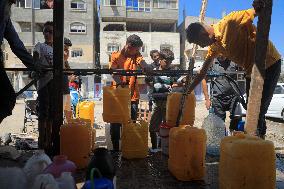
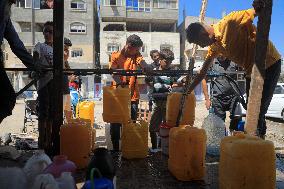
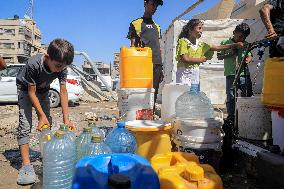
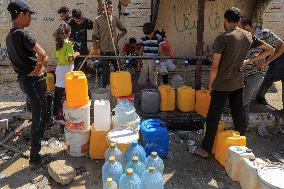
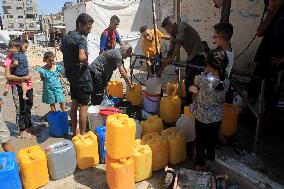
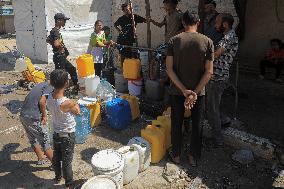
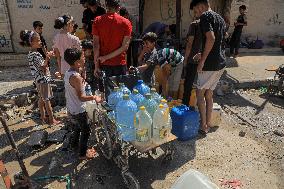
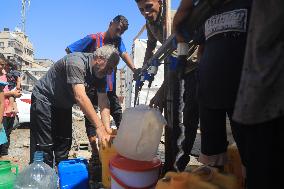
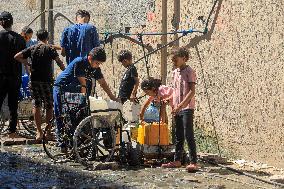
People fetch water in the southern Gaza Strip city of Khan Younis, on July 2, 2024. Nine months into the Palestinian-Israeli conflict, war-torn Gaza is facing increasingly severe water shortages exacerbated by the dry summer, dwindling supplies, and devastated infrastructure. About 67 percent of water, sanitation facilities and infrastructure have been destroyed or damaged in the Gaza Strip, the United Nations Relief and Works Agency for Palestine Refugees in the Near East (UNRWA) said on the social media platform X in June. Water production from groundwater wells, which historically accounted for 80 percent of Gaza's water supply, has recently dropped from 35,000 to 15,000 cubic meters per day, shrinking by over 50 percent of pre-war groundwater production capacity, according to UN statistics in June. Photo by Rizek Abdeljawad/Xinhua/ABACAPRESS.COM

  •  
Water Shortage Raises Health Risks - Khan Younis

Water Shortage Raises Health Risks - Khan Younis

People fetch water in the southern Gaza Strip city of Khan Younis, on July 2, 2024. Nine months into the Palestinian-Israeli conflict, war-torn Gaza is facing increasingly severe water shortages exacerbated by the dry summer, dwindling supplies, and devastated infrastructure. About 67 percent of water, sanitation facilities and infrastructure have been destroyed or damaged in the Gaza Strip, the United Nations Relief and Works Agency for Palestine Refugees in the Near East (UNRWA) said on the social media platform X in June. Water production from groundwater wells, which historically accounted for 80 percent of Gaza's water supply, has recently dropped from 35,000 to 15,000 cubic meters per day, shrinking by over 50 percent of pre-war groundwater production capacity, according to UN statistics in June. Photo by Rizek Abdeljawad/Xinhua/ABACAPRESS.COM

  •  
Water Shortage Raises Health Risks - Khan Younis

Water Shortage Raises Health Risks - Khan Younis

People fetch water in the southern Gaza Strip city of Khan Younis, on July 2, 2024. Nine months into the Palestinian-Israeli conflict, war-torn Gaza is facing increasingly severe water shortages exacerbated by the dry summer, dwindling supplies, and devastated infrastructure. About 67 percent of water, sanitation facilities and infrastructure have been destroyed or damaged in the Gaza Strip, the United Nations Relief and Works Agency for Palestine Refugees in the Near East (UNRWA) said on the social media platform X in June. Water production from groundwater wells, which historically accounted for 80 percent of Gaza's water supply, has recently dropped from 35,000 to 15,000 cubic meters per day, shrinking by over 50 percent of pre-war groundwater production capacity, according to UN statistics in June. Photo by Rizek Abdeljawad/Xinhua/ABACAPRESS.COM

  •  
Water Shortage Raises Health Risks - Khan Younis

Water Shortage Raises Health Risks - Khan Younis

People fetch water in the southern Gaza Strip city of Khan Younis, on July 2, 2024. Nine months into the Palestinian-Israeli conflict, war-torn Gaza is facing increasingly severe water shortages exacerbated by the dry summer, dwindling supplies, and devastated infrastructure. About 67 percent of water, sanitation facilities and infrastructure have been destroyed or damaged in the Gaza Strip, the United Nations Relief and Works Agency for Palestine Refugees in the Near East (UNRWA) said on the social media platform X in June. Water production from groundwater wells, which historically accounted for 80 percent of Gaza's water supply, has recently dropped from 35,000 to 15,000 cubic meters per day, shrinking by over 50 percent of pre-war groundwater production capacity, according to UN statistics in June. Photo by Rizek Abdeljawad/Xinhua/ABACAPRESS.COM

  •  
Water Shortage Raises Health Risks - Khan Younis

Water Shortage Raises Health Risks - Khan Younis

People fetch water in the southern Gaza Strip city of Khan Younis, on July 2, 2024. Nine months into the Palestinian-Israeli conflict, war-torn Gaza is facing increasingly severe water shortages exacerbated by the dry summer, dwindling supplies, and devastated infrastructure. About 67 percent of water, sanitation facilities and infrastructure have been destroyed or damaged in the Gaza Strip, the United Nations Relief and Works Agency for Palestine Refugees in the Near East (UNRWA) said on the social media platform X in June. Water production from groundwater wells, which historically accounted for 80 percent of Gaza's water supply, has recently dropped from 35,000 to 15,000 cubic meters per day, shrinking by over 50 percent of pre-war groundwater production capacity, according to UN statistics in June. Photo by Rizek Abdeljawad/Xinhua/ABACAPRESS.COM

  •  
Water Shortage Raises Health Risks - Khan Younis

Water Shortage Raises Health Risks - Khan Younis

People fetch water in the southern Gaza Strip city of Khan Younis, on July 2, 2024. Nine months into the Palestinian-Israeli conflict, war-torn Gaza is facing increasingly severe water shortages exacerbated by the dry summer, dwindling supplies, and devastated infrastructure. About 67 percent of water, sanitation facilities and infrastructure have been destroyed or damaged in the Gaza Strip, the United Nations Relief and Works Agency for Palestine Refugees in the Near East (UNRWA) said on the social media platform X in June. Water production from groundwater wells, which historically accounted for 80 percent of Gaza's water supply, has recently dropped from 35,000 to 15,000 cubic meters per day, shrinking by over 50 percent of pre-war groundwater production capacity, according to UN statistics in June. Photo by Rizek Abdeljawad/Xinhua/ABACAPRESS.COM

  •  
Water Shortage Raises Health Risks - Khan Younis

Water Shortage Raises Health Risks - Khan Younis

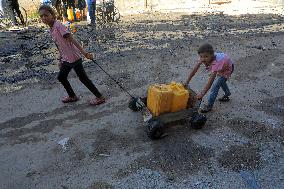
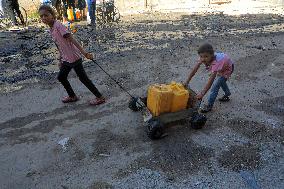
Children leave after fetching water in the southern Gaza Strip city of Khan Younis, on July 2, 2024. Nine months into the Palestinian-Israeli conflict, war-torn Gaza is facing increasingly severe water shortages exacerbated by the dry summer, dwindling supplies, and devastated infrastructure. About 67 percent of water, sanitation facilities and infrastructure have been destroyed or damaged in the Gaza Strip, the United Nations Relief and Works Agency for Palestine Refugees in the Near East (UNRWA) said on the social media platform X in June. Water production from groundwater wells, which historically accounted for 80 percent of Gaza's water supply, has recently dropped from 35,000 to 15,000 cubic meters per day, shrinking by over 50 percent of pre-war groundwater production capacity, according to UN statistics in June. Photo by Rizek Abdeljawad/Xinhua/ABACAPRESS.COM

  •  
Water Shortage Raises Health Risks - Khan Younis

Water Shortage Raises Health Risks - Khan Younis

People fetch water in the southern Gaza Strip city of Khan Younis, on July 2, 2024. Nine months into the Palestinian-Israeli conflict, war-torn Gaza is facing increasingly severe water shortages exacerbated by the dry summer, dwindling supplies, and devastated infrastructure. About 67 percent of water, sanitation facilities and infrastructure have been destroyed or damaged in the Gaza Strip, the United Nations Relief and Works Agency for Palestine Refugees in the Near East (UNRWA) said on the social media platform X in June. Water production from groundwater wells, which historically accounted for 80 percent of Gaza's water supply, has recently dropped from 35,000 to 15,000 cubic meters per day, shrinking by over 50 percent of pre-war groundwater production capacity, according to UN statistics in June. Photo by Rizek Abdeljawad/Xinhua/ABACAPRESS.COM

  •  
Water Shortage Raises Health Risks - Khan Younis

Water Shortage Raises Health Risks - Khan Younis

People fetch water in the southern Gaza Strip city of Khan Younis, on July 2, 2024. Nine months into the Palestinian-Israeli conflict, war-torn Gaza is facing increasingly severe water shortages exacerbated by the dry summer, dwindling supplies, and devastated infrastructure. About 67 percent of water, sanitation facilities and infrastructure have been destroyed or damaged in the Gaza Strip, the United Nations Relief and Works Agency for Palestine Refugees in the Near East (UNRWA) said on the social media platform X in June. Water production from groundwater wells, which historically accounted for 80 percent of Gaza's water supply, has recently dropped from 35,000 to 15,000 cubic meters per day, shrinking by over 50 percent of pre-war groundwater production capacity, according to UN statistics in June. Photo by Rizek Abdeljawad/Xinhua/ABACAPRESS.COM

  •  
MIDEAST-GAZA-KHAN YOUNIS-WATER SHORTAGE

MIDEAST-GAZA-KHAN YOUNIS-WATER SHORTAGE

(240703) -- GAZA, July 3, 2024 Photo by Xinhua/ABACAPRESS.COM) -- People fetch water in the southern Gaza Strip city of Khan Younis, on July 2, 2024. Nine months into the Palestinian-Israeli conflict, war-torn Gaza is facing increasingly severe water shortages exacerbated by the dry summer, dwindling supplies, and devastated infrastructure. About 67 percent of water, sanitation facilities and infrastructure have been destroyed or damaged in the Gaza Strip, the United Nations Relief and Works Agency for Palestine Refugees in the Near East (UNRWA) said on the social media platform X in June. Water production from groundwater wells, which historically accounted for 80 percent of Gaza's water supply, has recently dropped from 35,000 to 15,000 cubic meters per day, shrinking by over 50 percent of pre-war groundwater production capacity, according to UN statistics in June. (Photo by Rizek Abdeljawad/Xinhua/ABACAPRESS.COM TO GO WITH Feature: Acute water shortage deepens Gazans' suffering amid hot summer

  •  
MIDEAST-GAZA-KHAN YOUNIS-WATER SHORTAGE

MIDEAST-GAZA-KHAN YOUNIS-WATER SHORTAGE

(240703) -- GAZA, July 3, 2024 Photo by Xinhua/ABACAPRESS.COM) -- People fetch water in the southern Gaza Strip city of Khan Younis, on July 2, 2024. Nine months into the Palestinian-Israeli conflict, war-torn Gaza is facing increasingly severe water shortages exacerbated by the dry summer, dwindling supplies, and devastated infrastructure. About 67 percent of water, sanitation facilities and infrastructure have been destroyed or damaged in the Gaza Strip, the United Nations Relief and Works Agency for Palestine Refugees in the Near East (UNRWA) said on the social media platform X in June. Water production from groundwater wells, which historically accounted for 80 percent of Gaza's water supply, has recently dropped from 35,000 to 15,000 cubic meters per day, shrinking by over 50 percent of pre-war groundwater production capacity, according to UN statistics in June. (Photo by Rizek Abdeljawad/Xinhua/ABACAPRESS.COM TO GO WITH Feature: Acute water shortage deepens Gazans' suffering amid hot summer

  •  
MIDEAST-GAZA-KHAN YOUNIS-WATER SHORTAGE

MIDEAST-GAZA-KHAN YOUNIS-WATER SHORTAGE

(240703) -- GAZA, July 3, 2024 Photo by Xinhua/ABACAPRESS.COM) -- People fetch water in the southern Gaza Strip city of Khan Younis, on July 2, 2024. Nine months into the Palestinian-Israeli conflict, war-torn Gaza is facing increasingly severe water shortages exacerbated by the dry summer, dwindling supplies, and devastated infrastructure. About 67 percent of water, sanitation facilities and infrastructure have been destroyed or damaged in the Gaza Strip, the United Nations Relief and Works Agency for Palestine Refugees in the Near East (UNRWA) said on the social media platform X in June. Water production from groundwater wells, which historically accounted for 80 percent of Gaza's water supply, has recently dropped from 35,000 to 15,000 cubic meters per day, shrinking by over 50 percent of pre-war groundwater production capacity, according to UN statistics in June. (Photo by Rizek Abdeljawad/Xinhua/ABACAPRESS.COM TO GO WITH Feature: Acute water shortage deepens Gazans' suffering amid hot summer

  •  
MIDEAST-GAZA-KHAN YOUNIS-WATER SHORTAGE

MIDEAST-GAZA-KHAN YOUNIS-WATER SHORTAGE

(240703) -- GAZA, July 3, 2024 Photo by Xinhua/ABACAPRESS.COM) -- People fetch water in the southern Gaza Strip city of Khan Younis, on July 2, 2024. Nine months into the Palestinian-Israeli conflict, war-torn Gaza is facing increasingly severe water shortages exacerbated by the dry summer, dwindling supplies, and devastated infrastructure. About 67 percent of water, sanitation facilities and infrastructure have been destroyed or damaged in the Gaza Strip, the United Nations Relief and Works Agency for Palestine Refugees in the Near East (UNRWA) said on the social media platform X in June. Water production from groundwater wells, which historically accounted for 80 percent of Gaza's water supply, has recently dropped from 35,000 to 15,000 cubic meters per day, shrinking by over 50 percent of pre-war groundwater production capacity, according to UN statistics in June. (Photo by Rizek Abdeljawad/Xinhua/ABACAPRESS.COM TO GO WITH Feature: Acute water shortage deepens Gazans' suffering amid hot summer

  •  
MIDEAST-GAZA-KHAN YOUNIS-WATER SHORTAGE

MIDEAST-GAZA-KHAN YOUNIS-WATER SHORTAGE

(240703) -- GAZA, July 3, 2024 Photo by Xinhua/ABACAPRESS.COM) -- People fetch water in the southern Gaza Strip city of Khan Younis, on July 2, 2024. Nine months into the Palestinian-Israeli conflict, war-torn Gaza is facing increasingly severe water shortages exacerbated by the dry summer, dwindling supplies, and devastated infrastructure. About 67 percent of water, sanitation facilities and infrastructure have been destroyed or damaged in the Gaza Strip, the United Nations Relief and Works Agency for Palestine Refugees in the Near East (UNRWA) said on the social media platform X in June. Water production from groundwater wells, which historically accounted for 80 percent of Gaza's water supply, has recently dropped from 35,000 to 15,000 cubic meters per day, shrinking by over 50 percent of pre-war groundwater production capacity, according to UN statistics in June. (Photo by Rizek Abdeljawad/Xinhua/ABACAPRESS.COM TO GO WITH Feature: Acute water shortage deepens Gazans' suffering amid hot summer

  •  
MIDEAST-GAZA-KHAN YOUNIS-WATER SHORTAGE

MIDEAST-GAZA-KHAN YOUNIS-WATER SHORTAGE

(240703) -- GAZA, July 3, 2024 Photo by Xinhua/ABACAPRESS.COM) -- Children leave after fetching water in the southern Gaza Strip city of Khan Younis, on July 2, 2024. Nine months into the Palestinian-Israeli conflict, war-torn Gaza is facing increasingly severe water shortages exacerbated by the dry summer, dwindling supplies, and devastated infrastructure. About 67 percent of water, sanitation facilities and infrastructure have been destroyed or damaged in the Gaza Strip, the United Nations Relief and Works Agency for Palestine Refugees in the Near East (UNRWA) said on the social media platform X in June. Water production from groundwater wells, which historically accounted for 80 percent of Gaza's water supply, has recently dropped from 35,000 to 15,000 cubic meters per day, shrinking by over 50 percent of pre-war groundwater production capacity, according to UN statistics in June. (Photo by Rizek Abdeljawad/Xinhua/ABACAPRESS.COM TO GO WITH Feature: Acute water shortage deepens Gazans' suffering amid hot su

  •  
MIDEAST-GAZA-KHAN YOUNIS-WATER SHORTAGE

MIDEAST-GAZA-KHAN YOUNIS-WATER SHORTAGE

(240703) -- GAZA, July 3, 2024 Photo by Xinhua/ABACAPRESS.COM) -- People fetch water in the southern Gaza Strip city of Khan Younis, on July 2, 2024. Nine months into the Palestinian-Israeli conflict, war-torn Gaza is facing increasingly severe water shortages exacerbated by the dry summer, dwindling supplies, and devastated infrastructure. About 67 percent of water, sanitation facilities and infrastructure have been destroyed or damaged in the Gaza Strip, the United Nations Relief and Works Agency for Palestine Refugees in the Near East (UNRWA) said on the social media platform X in June. Water production from groundwater wells, which historically accounted for 80 percent of Gaza's water supply, has recently dropped from 35,000 to 15,000 cubic meters per day, shrinking by over 50 percent of pre-war groundwater production capacity, according to UN statistics in June. (Photo by Rizek Abdeljawad/Xinhua/ABACAPRESS.COM TO GO WITH Feature: Acute water shortage deepens Gazans' suffering amid hot summer

  •  
MIDEAST-GAZA-KHAN YOUNIS-WATER SHORTAGE

MIDEAST-GAZA-KHAN YOUNIS-WATER SHORTAGE

(240703) -- GAZA, July 3, 2024 Photo by Xinhua/ABACAPRESS.COM) -- People fetch water in the southern Gaza Strip city of Khan Younis, on July 2, 2024. Nine months into the Palestinian-Israeli conflict, war-torn Gaza is facing increasingly severe water shortages exacerbated by the dry summer, dwindling supplies, and devastated infrastructure. About 67 percent of water, sanitation facilities and infrastructure have been destroyed or damaged in the Gaza Strip, the United Nations Relief and Works Agency for Palestine Refugees in the Near East (UNRWA) said on the social media platform X in June. Water production from groundwater wells, which historically accounted for 80 percent of Gaza's water supply, has recently dropped from 35,000 to 15,000 cubic meters per day, shrinking by over 50 percent of pre-war groundwater production capacity, according to UN statistics in June. (Photo by Rizek Abdeljawad/Xinhua/ABACAPRESS.COM TO GO WITH Feature: Acute water shortage deepens Gazans' suffering amid hot summer

  •  
MIDEAST-GAZA-KHAN YOUNIS-WATER SHORTAGE

MIDEAST-GAZA-KHAN YOUNIS-WATER SHORTAGE

(240703) -- GAZA, July 3, 2024 Photo by Xinhua/ABACAPRESS.COM) -- People fetch water in the southern Gaza Strip city of Khan Younis, on July 2, 2024. Nine months into the Palestinian-Israeli conflict, war-torn Gaza is facing increasingly severe water shortages exacerbated by the dry summer, dwindling supplies, and devastated infrastructure. About 67 percent of water, sanitation facilities and infrastructure have been destroyed or damaged in the Gaza Strip, the United Nations Relief and Works Agency for Palestine Refugees in the Near East (UNRWA) said on the social media platform X in June. Water production from groundwater wells, which historically accounted for 80 percent of Gaza's water supply, has recently dropped from 35,000 to 15,000 cubic meters per day, shrinking by over 50 percent of pre-war groundwater production capacity, according to UN statistics in June. (Photo by Rizek Abdeljawad/Xinhua/ABACAPRESS.COM TO GO WITH Feature: Acute water shortage deepens Gazans' suffering amid hot summer

  •  
Plastic Recycling Factory - Bangladesh

Plastic Recycling Factory - Bangladesh

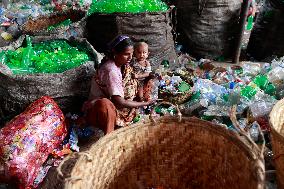
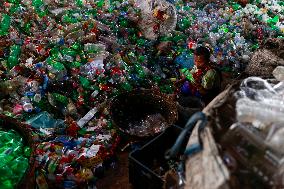
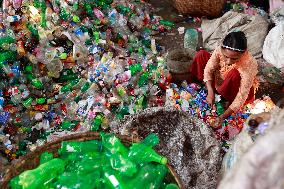
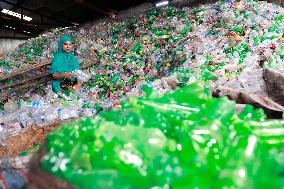
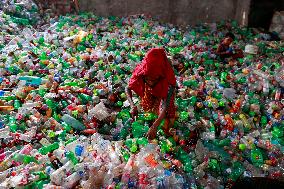
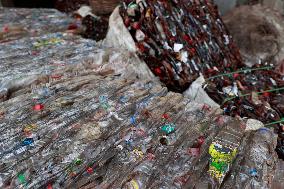
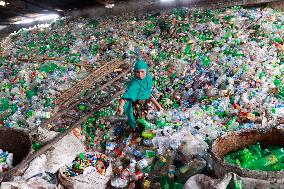
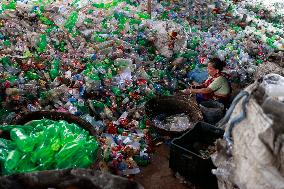
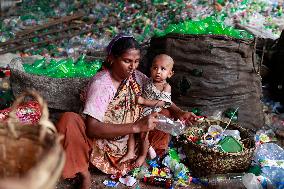
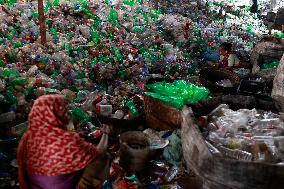
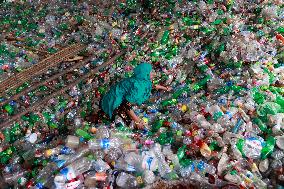
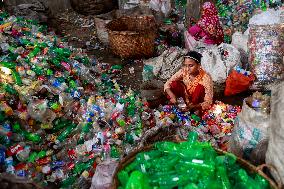
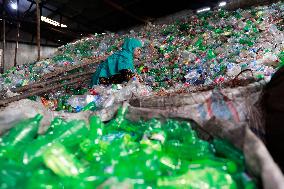
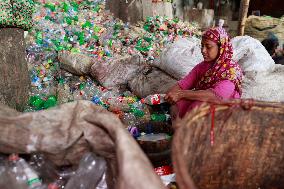
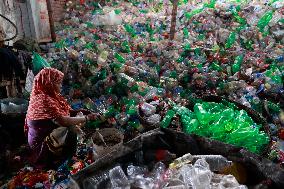
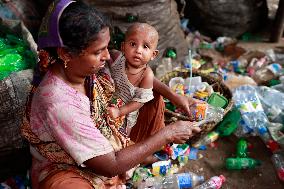
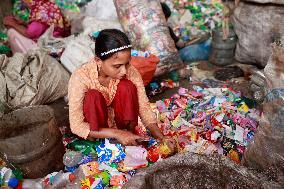
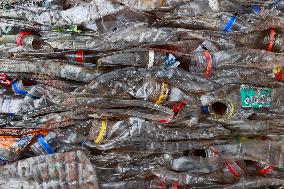
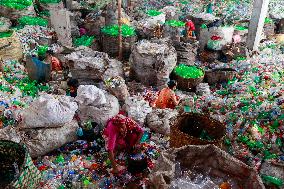
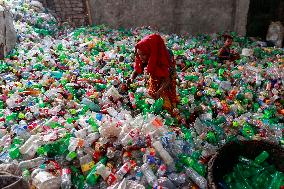
A Bangladeshi woman works in a plastic bottle recycling factory in Dhaka, Bangladesh, May 14, 2024. Workers are sorting discarded plastic bottles collected from the garbage heap and preparing them for recycling. These bottles are cleaned and cut into pieces by a cutting machine. There, new products are made from these pieces of plastic. According to the Environment Department of Bangladesh, about 24 thousand tons of waste is produced every day in the country. Of this 7.35 percent waste are plastic materials, which is 1,700 tones. Only 50 percent of these plastic wastes are recyclable. Photo by Suvra Kanti Das/ABACAPRESS.COM

  •  
Plastic Recycling Factory - Bangladesh

Plastic Recycling Factory - Bangladesh

A Bangladeshi woman works in a plastic bottle recycling factory in Dhaka, Bangladesh, May 14, 2024. Workers are sorting discarded plastic bottles collected from the garbage heap and preparing them for recycling. These bottles are cleaned and cut into pieces by a cutting machine. There, new products are made from these pieces of plastic. According to the Environment Department of Bangladesh, about 24 thousand tons of waste is produced every day in the country. Of this 7.35 percent waste are plastic materials, which is 1,700 tones. Only 50 percent of these plastic wastes are recyclable. Photo by Suvra Kanti Das/ABACAPRESS.COM

  •  
Plastic Recycling Factory - Bangladesh

Plastic Recycling Factory - Bangladesh

A Bangladeshi woman works in a plastic bottle recycling factory in Dhaka, Bangladesh, May 14, 2024. Workers are sorting discarded plastic bottles collected from the garbage heap and preparing them for recycling. These bottles are cleaned and cut into pieces by a cutting machine. There, new products are made from these pieces of plastic. According to the Environment Department of Bangladesh, about 24 thousand tons of waste is produced every day in the country. Of this 7.35 percent waste are plastic materials, which is 1,700 tones. Only 50 percent of these plastic wastes are recyclable. Photo by Suvra Kanti Das/ABACAPRESS.COM

  •  
Plastic Recycling Factory - Bangladesh

Plastic Recycling Factory - Bangladesh

A Bangladeshi woman works in a plastic bottle recycling factory in Dhaka, Bangladesh, May 14, 2024. Workers are sorting discarded plastic bottles collected from the garbage heap and preparing them for recycling. These bottles are cleaned and cut into pieces by a cutting machine. There, new products are made from these pieces of plastic. According to the Environment Department of Bangladesh, about 24 thousand tons of waste is produced every day in the country. Of this 7.35 percent waste are plastic materials, which is 1,700 tones. Only 50 percent of these plastic wastes are recyclable. Photo by Suvra Kanti Das/ABACAPRESS.COM

  •  
Plastic Recycling Factory - Bangladesh

Plastic Recycling Factory - Bangladesh

A Bangladeshi woman works in a plastic bottle recycling factory in Dhaka, Bangladesh, May 14, 2024. Workers are sorting discarded plastic bottles collected from the garbage heap and preparing them for recycling. These bottles are cleaned and cut into pieces by a cutting machine. There, new products are made from these pieces of plastic. According to the Environment Department of Bangladesh, about 24 thousand tons of waste is produced every day in the country. Of this 7.35 percent waste are plastic materials, which is 1,700 tones. Only 50 percent of these plastic wastes are recyclable. Photo by Suvra Kanti Das/ABACAPRESS.COM

  •  
Plastic Recycling Factory - Bangladesh

Plastic Recycling Factory - Bangladesh

A Bangladeshi woman works in a plastic bottle recycling factory in Dhaka, Bangladesh, May 14, 2024. Workers are sorting discarded plastic bottles collected from the garbage heap and preparing them for recycling. These bottles are cleaned and cut into pieces by a cutting machine. There, new products are made from these pieces of plastic. According to the Environment Department of Bangladesh, about 24 thousand tons of waste is produced every day in the country. Of this 7.35 percent waste are plastic materials, which is 1,700 tones. Only 50 percent of these plastic wastes are recyclable. Photo by Suvra Kanti Das/ABACAPRESS.COM

  •  
Plastic Recycling Factory - Bangladesh

Plastic Recycling Factory - Bangladesh

A Bangladeshi woman works in a plastic bottle recycling factory in Dhaka, Bangladesh, May 14, 2024. Workers are sorting discarded plastic bottles collected from the garbage heap and preparing them for recycling. These bottles are cleaned and cut into pieces by a cutting machine. There, new products are made from these pieces of plastic. According to the Environment Department of Bangladesh, about 24 thousand tons of waste is produced every day in the country. Of this 7.35 percent waste are plastic materials, which is 1,700 tones. Only 50 percent of these plastic wastes are recyclable. Photo by Suvra Kanti Das/ABACAPRESS.COM

  •  
Plastic Recycling Factory - Bangladesh

Plastic Recycling Factory - Bangladesh

A Bangladeshi woman works in a plastic bottle recycling factory in Dhaka, Bangladesh, May 14, 2024. Workers are sorting discarded plastic bottles collected from the garbage heap and preparing them for recycling. These bottles are cleaned and cut into pieces by a cutting machine. There, new products are made from these pieces of plastic. According to the Environment Department of Bangladesh, about 24 thousand tons of waste is produced every day in the country. Of this 7.35 percent waste are plastic materials, which is 1,700 tones. Only 50 percent of these plastic wastes are recyclable. Photo by Suvra Kanti Das/ABACAPRESS.COM

  •  
Plastic Recycling Factory - Bangladesh

Plastic Recycling Factory - Bangladesh

A Bangladeshi woman works in a plastic bottle recycling factory in Dhaka, Bangladesh, May 14, 2024. Workers are sorting discarded plastic bottles collected from the garbage heap and preparing them for recycling. These bottles are cleaned and cut into pieces by a cutting machine. There, new products are made from these pieces of plastic. According to the Environment Department of Bangladesh, about 24 thousand tons of waste is produced every day in the country. Of this 7.35 percent waste are plastic materials, which is 1,700 tones. Only 50 percent of these plastic wastes are recyclable. Photo by Suvra Kanti Das/ABACAPRESS.COM

  •  
Plastic Recycling Factory - Bangladesh

Plastic Recycling Factory - Bangladesh

A Bangladeshi woman works in a plastic bottle recycling factory in Dhaka, Bangladesh, May 14, 2024. Workers are sorting discarded plastic bottles collected from the garbage heap and preparing them for recycling. These bottles are cleaned and cut into pieces by a cutting machine. There, new products are made from these pieces of plastic. According to the Environment Department of Bangladesh, about 24 thousand tons of waste is produced every day in the country. Of this 7.35 percent waste are plastic materials, which is 1,700 tones. Only 50 percent of these plastic wastes are recyclable. Photo by Suvra Kanti Das/ABACAPRESS.COM

  •  
Plastic Recycling Factory - Bangladesh

Plastic Recycling Factory - Bangladesh

A Bangladeshi woman works in a plastic bottle recycling factory in Dhaka, Bangladesh, May 14, 2024. Workers are sorting discarded plastic bottles collected from the garbage heap and preparing them for recycling. These bottles are cleaned and cut into pieces by a cutting machine. There, new products are made from these pieces of plastic. According to the Environment Department of Bangladesh, about 24 thousand tons of waste is produced every day in the country. Of this 7.35 percent waste are plastic materials, which is 1,700 tones. Only 50 percent of these plastic wastes are recyclable. Photo by Suvra Kanti Das/ABACAPRESS.COM

  •  
Plastic Recycling Factory - Bangladesh

Plastic Recycling Factory - Bangladesh

A Bangladeshi woman works in a plastic bottle recycling factory in Dhaka, Bangladesh, May 14, 2024. Workers are sorting discarded plastic bottles collected from the garbage heap and preparing them for recycling. These bottles are cleaned and cut into pieces by a cutting machine. There, new products are made from these pieces of plastic. According to the Environment Department of Bangladesh, about 24 thousand tons of waste is produced every day in the country. Of this 7.35 percent waste are plastic materials, which is 1,700 tones. Only 50 percent of these plastic wastes are recyclable. Photo by Suvra Kanti Das/ABACAPRESS.COM

  •  
Plastic Recycling Factory - Bangladesh

Plastic Recycling Factory - Bangladesh

A Bangladeshi woman works in a plastic bottle recycling factory in Dhaka, Bangladesh, May 14, 2024. Workers are sorting discarded plastic bottles collected from the garbage heap and preparing them for recycling. These bottles are cleaned and cut into pieces by a cutting machine. There, new products are made from these pieces of plastic. According to the Environment Department of Bangladesh, about 24 thousand tons of waste is produced every day in the country. Of this 7.35 percent waste are plastic materials, which is 1,700 tones. Only 50 percent of these plastic wastes are recyclable. Photo by Suvra Kanti Das/ABACAPRESS.COM

  •  
Plastic Recycling Factory - Bangladesh

Plastic Recycling Factory - Bangladesh

A Bangladeshi woman works in a plastic bottle recycling factory in Dhaka, Bangladesh, May 14, 2024. Workers are sorting discarded plastic bottles collected from the garbage heap and preparing them for recycling. These bottles are cleaned and cut into pieces by a cutting machine. There, new products are made from these pieces of plastic. According to the Environment Department of Bangladesh, about 24 thousand tons of waste is produced every day in the country. Of this 7.35 percent waste are plastic materials, which is 1,700 tones. Only 50 percent of these plastic wastes are recyclable. Photo by Suvra Kanti Das/ABACAPRESS.COM

  •  
Plastic Recycling Factory - Bangladesh

Plastic Recycling Factory - Bangladesh

A Bangladeshi woman works in a plastic bottle recycling factory in Dhaka, Bangladesh, May 14, 2024. Workers are sorting discarded plastic bottles collected from the garbage heap and preparing them for recycling. These bottles are cleaned and cut into pieces by a cutting machine. There, new products are made from these pieces of plastic. According to the Environment Department of Bangladesh, about 24 thousand tons of waste is produced every day in the country. Of this 7.35 percent waste are plastic materials, which is 1,700 tones. Only 50 percent of these plastic wastes are recyclable. Photo by Suvra Kanti Das/ABACAPRESS.COM

  •  
Plastic Recycling Factory - Bangladesh

Plastic Recycling Factory - Bangladesh

A Bangladeshi woman works in a plastic bottle recycling factory in Dhaka, Bangladesh, May 14, 2024. Workers are sorting discarded plastic bottles collected from the garbage heap and preparing them for recycling. These bottles are cleaned and cut into pieces by a cutting machine. There, new products are made from these pieces of plastic. According to the Environment Department of Bangladesh, about 24 thousand tons of waste is produced every day in the country. Of this 7.35 percent waste are plastic materials, which is 1,700 tones. Only 50 percent of these plastic wastes are recyclable. Photo by Suvra Kanti Das/ABACAPRESS.COM

  •  
Plastic Recycling Factory - Bangladesh

Plastic Recycling Factory - Bangladesh

A Bangladeshi woman works in a plastic bottle recycling factory in Dhaka, Bangladesh, May 14, 2024. Workers are sorting discarded plastic bottles collected from the garbage heap and preparing them for recycling. These bottles are cleaned and cut into pieces by a cutting machine. There, new products are made from these pieces of plastic. According to the Environment Department of Bangladesh, about 24 thousand tons of waste is produced every day in the country. Of this 7.35 percent waste are plastic materials, which is 1,700 tones. Only 50 percent of these plastic wastes are recyclable. Photo by Suvra Kanti Das/ABACAPRESS.COM

  •  
Plastic Recycling Factory - Bangladesh

Plastic Recycling Factory - Bangladesh

A Bangladeshi woman works in a plastic bottle recycling factory in Dhaka, Bangladesh, May 14, 2024. Workers are sorting discarded plastic bottles collected from the garbage heap and preparing them for recycling. These bottles are cleaned and cut into pieces by a cutting machine. There, new products are made from these pieces of plastic. According to the Environment Department of Bangladesh, about 24 thousand tons of waste is produced every day in the country. Of this 7.35 percent waste are plastic materials, which is 1,700 tones. Only 50 percent of these plastic wastes are recyclable. Photo by Suvra Kanti Das/ABACAPRESS.COM

  •  
Plastic Recycling Factory - Bangladesh

Plastic Recycling Factory - Bangladesh

A Bangladeshi woman works in a plastic bottle recycling factory in Dhaka, Bangladesh, May 14, 2024. Workers are sorting discarded plastic bottles collected from the garbage heap and preparing them for recycling. These bottles are cleaned and cut into pieces by a cutting machine. There, new products are made from these pieces of plastic. According to the Environment Department of Bangladesh, about 24 thousand tons of waste is produced every day in the country. Of this 7.35 percent waste are plastic materials, which is 1,700 tones. Only 50 percent of these plastic wastes are recyclable. Photo by Suvra Kanti Das/ABACAPRESS.COM

  •  
Plastic Recycling Factory - Bangladesh

Plastic Recycling Factory - Bangladesh

A Bangladeshi woman works in a plastic bottle recycling factory in Dhaka, Bangladesh, May 14, 2024. Workers are sorting discarded plastic bottles collected from the garbage heap and preparing them for recycling. These bottles are cleaned and cut into pieces by a cutting machine. There, new products are made from these pieces of plastic. According to the Environment Department of Bangladesh, about 24 thousand tons of waste is produced every day in the country. Of this 7.35 percent waste are plastic materials, which is 1,700 tones. Only 50 percent of these plastic wastes are recyclable. Photo by Suvra Kanti Das/ABACAPRESS.COM

  •  

Uganda resumes passenger train services in Kampala after renovation

STORY: Uganda resumes passenger train services in Kampala after renovation SHOOTING TIME: May 2, 2024 DATELINE: May 4, 2024 LENGTH: 0:02:56 LOCATION: Kampala CATEGORY: SOCIETY/TRANSPORTATION SHOTLIST: 1. various of Kampala 2. various of the train station in Kampala 3. various of the platform of the train station in Kampala 4. SOUNDBITE 1 (English): KATUMBA WAMALA, Minister of Works and Transport 5. various of the train 6. SOUNDBITE 2 (English): RIHANNA NANTAMBI, Passenger 7. SOUNDBITE 3 (English): KATUMBA WAMALA, Minister of Works and Transport 8. various of the train STORYLINE: Uganda has resumed passenger train services in parts of the capital city Kampala following a year of renovation work. A locomotive pulling five coaches, with a capacity of carrying up to 800 passengers, now operates four trips per day -- two in the morning and two in the evening. The fare for a trip is 2,000 Ugandan shillings (about 50 U.S. cents), an increase from the previous 1,000 shillings. The renovation of the Kampala

  •  

15 killed in Israeli strike on refugee camp in central Gaza: media

STORY: 15 killed in Israeli strike on refugee camp in central Gaza: media SHOOTING TIME: Nov. 2, 2023 DATELINE: Nov. 3, 2023 LENGTH: 00:01:32 LOCATION: GAZA, Palestine CATEGORY: POLITICS/MILITARY SHOTLIST: 1. various of the rescue site 2. SOUNDBITE 1 (Arabic): ZAKARIA YEHYA, Gaza resident 3. SOUNDBITE 2 (Arabic): GAZA RESIDENT 4. various of the rescue site STORYLINE: An Israeli air strike hit the Bureij refugee camp in central Gaza on Thursday, killing 15 people, according to the official Palestinian news agency of WAFA. The Bureij refugee camp is a comparatively small refugee camp hosting about 46,000 Palestinian refugees, according to the United Nations Relief and Works Agency for Palestine Refugees. SOUNDBITE 1 (Arabic): ZAKARIA YEHYA, Gaza resident "Ten days ago, we were in one of the neighborhoods near here, only 50 meters away from here. In that neighborhood, one of its houses that was next to ours was bombed. Of course, the bombing resulted in the destruction of our house and the death and injury

  •  
ERITREA-ASMARA-CHINESE AGRICULTURAL EXPERTS

ERITREA-ASMARA-CHINESE AGRICULTURAL EXPERTS

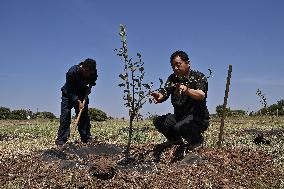
(230929) -- ASMARA, Sept. 29, 2023 (Xinhua) -- Fruit crop expert Wang Li (R) works with a local farmer on field management of apple saplings at a demonstration orchard of agricultural technical assistance, in Asmara, Eritrea, Sept. 27, 2023. Agriculture is the mainstay of Eritrea's economy, with about four-fifths of the population engaged in farming and animal husbandry. However, the lack of crop varieties and backward agricultural technology seriously restrict the country's agricultural development. In order to promote the development of Eritrea's agricultural industry, the Ministry of Agriculture and Rural Affairs of China has sent three groups of experts to Eritrea to carry out technical assistance in the fields of legumes, fruit tree gardening and oil, and achieved remarkable results. Broad beans, oilseed rape, and some other experimental crops have been harvested with unit yields increasing by more than 50 percent compared with local varieties. (Xinhua/Han Xu)

  •  

Prague Fashion Week underway in Czech capital

STORY: Prague Fashion Week underway in Czech capital DATELINE: Sept. 5, 2023 LENGTH: 00:02:50 LOCATION: Prague CATEGORY: SOCIETY SHOTLIST: 1. various of the fashion show 2. SOUNDBITE 1 (Czech): DENISA DOVALA, Designer 3. SOUNDBITE 2 (Czech): Visitor STORYLINE: The fall edition of Mercedes-Benz Prague Fashion Week, the largest fashion event in the Czech Republic, is being held in Prague from Sept. 1 to 7. The fashion event promises to be a vibrant showcase of Czech fashion talents. On Monday, designers Denisa Dovala and Lucie Kurthi, who are participating in the event for the first time, presented their works at the fashion event's main venue -- a power plant-turned- cultural monument in Prague. SOUNDBITE 1 (Czech): DENISA DOVALA, Designer "My collection is called 'Lines of Our Souls,' and it's a collection about the journey of our souls that travel through different lives. The journey is depicted in grey, black, and beige, and of course, the souls are displayed with the color white and alternating thei

  •  
CHINA-SOUTH CHINA SEA-ANCIENT SHIPWRECK-ARCHAEOLOGICAL INVESTIGATION (CN)

CHINA-SOUTH CHINA SEA-ANCIENT SHIPWRECK-ARCHAEOLOGICAL INVESTIGATION (CN)

(230531) -- HAIKOU, May 31, 2023 (Xinhua) -- A hydronaut works on the archaeological data collected underwater at the scientific research ship Tansuo-1 in the South China Sea, May 25, 2023. An iron anchor and a box have been discovered near one of the two South China Sea ancient shipwrecks where a Chinese archaeological investigation is ongoing. Approved by the National Cultural Heritage Administration, a deep-sea archaeological team is conducting the first stage of investigations at the site of the No. 1 and No. 2 shipwrecks near the northwest continental slope of the South China Sea. The investigation will run from late May to early June this year. The iron anchor and the box were discovered in the southwestern direction of the No. 1 shipwreck site, with a distance of about 50 meters between them. (Xinhua/Pu Xiaoxu)

  •  
Paintings on show to mark 20th anniv. of Teigin inmate's death

Paintings on show to mark 20th anniv. of Teigin inmate's death

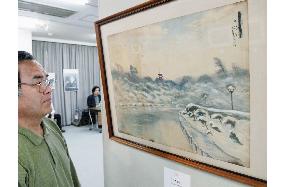
TOKYO, Japan - A painting by Sadamichi Hirasawa, who was sentenced to death over a 1948 mass-poisoning case known as the ''Teigin Incident,'' on display at a Tokyo art gallery on May 16 to mark the 20th anniversary of his death in prison. The exhibition shows about 50 works by the award-winning painter, who died in May 1987 at age 95 after he was first sentenced to death in 1950.

  •  
Matsushita acquires 80% stake in India's Anchor Electricals

Matsushita acquires 80% stake in India's Anchor Electricals

OSAKA, Japan - Matsushita Electric Works Ltd. President Koichi Hatanaka tells a press conference in Osaka on April 23 that the company has acquired an 80 percent stake in Indian electrical housing material maker Anchor Electricals Private Ltd. at a cost of about 50 billion yen.

  •  
Kyoto brothers celebrate life of Nishijin art

Kyoto brothers celebrate life of Nishijin art

KYOTO, Japan - Two artisan brothers in Kyoto -- Itaro Yamaguchi (R), 101, and his brother Yasujiro, 99 -- will celebrate their lifelong careers dedicated to Kyoto's famed Nishijin textile, opening their first joint exhibition in December in Tokyo. The exhibition will feature about 50 works, including ''Genji'' scrolls and Noh costumes.

  •  
MYANMAR-YANGON-WOOD CARVING

MYANMAR-YANGON-WOOD CARVING

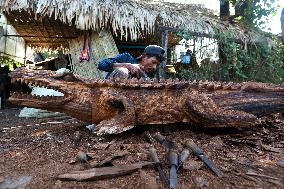
(221124) -- YANGON, Nov. 24, 2022 (Xinhua) -- A man works on a piece of wood sculpture in Yangon, Myanmar, Nov. 22, 2022. The sculptors from Myanmar's Darpein, known as a center of the country's wood sculpturing, were being forced to relocate their businesses to other parts of Myanmar because of a raw material shortage. Commonly known as Darpein wood sculpture village, the small town located about 50 kilometers northeast of downtown Yangon is home to more than 1,000 wood carvers. TO GO WITH "Feature: What's behind sculptors' exodus from Myanmar's woodcraft village" (Photo by Myo Kyaw Soe/Xinhua)

  •  
CHINA-XINJIANG-COTTON-FARMER (CN)

CHINA-XINJIANG-COTTON-FARMER (CN)

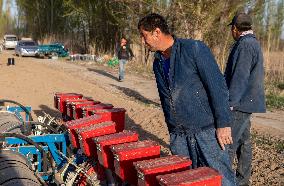
(220422) -- SHAWAN, April 22, 2022 (Xinhua) -- Ili Mehmet looks at the seeder as workers take a break from work in his cotton field in Shawan, northwest China's Xinjiang Uygur Autonomous Region, April 16, 2022. Ili Mehmet, 50, lives in Shawan, a major cotton-producing area in Xinjiang. During the sowing season in spring, farm works were carried out mainly by hired mechanized planting teams. But Ili Mehmet still spends his spare time in the 700 mu (about 46.7 hectares) of cotton field he contracted with his business partner Duan Zhizhong, learning new planting techniques from others. Besides working in the cotton fields, he also takes care of more than 100 sheep raised at home. (Xinhua/Hu Huhu)

  •  
CHINA-XINJIANG-COTTON-FARMER (CN)

CHINA-XINJIANG-COTTON-FARMER (CN)

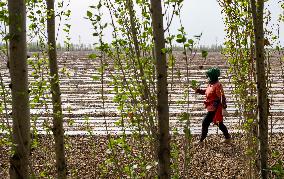
(220422) -- SHAWAN, April 22, 2022 (Xinhua) -- Ili Mehmet's wife Hernipam Kurban checks on the plastic mulch in their cotton field in Shawan, northwest China's Xinjiang Uygur Autonomous Region, April 19, 2022. Ili Mehmet, 50, lives in Shawan, a major cotton-producing area in Xinjiang. During the sowing season in spring, farm works were carried out mainly by hired mechanized planting teams. But Ili Mehmet still spends his spare time in the 700 mu (about 46.7 hectares) of cotton field he contracted with his business partner Duan Zhizhong, learning new planting techniques from others. Besides working in the cotton fields, he also takes care of more than 100 sheep raised at home. (Xinhua/Hu Huhu)

  • Main
  • Top
  • Editorial
  • Creative
  • About Us
  • About ILG
  • Terms of use
  • Company
  • BEHIND
  • Price List
  • Single Plan
  • Monthly Plan
  • Services
  • Shooting
  • Rights Clearance
  • Support
  • FAQ
  • How To Buy
  • Contact Us
  • Become a Partner

© KYODO NEWS IMAGES INC

All Rights Reserved.

  • Editorial
  • Olympics
  • News
  • Sports
  • Japan
  • Tech
  • Royal
  • Disaster
  • NorthKorea
  • Old Japan
  • SNS
  • Creative
  • Food
  • Japan
  • Landscape
  • Animal
  • Popular
  • #Ukraine
  • #China
  • #coronavirus
  • #N. Korea
  • #Russia
  • #Thailand
  • #Ukraine
  • #China
  • #coronavirus
  • #N. Korea
  • #Russia
  • #Thailand
  • Food
  • Japan
  • Landscape
  • Animal
  • Olympics
  • News
  • Sports
  • Japan
  • Tech
  • Royal
  • Disaster
  • NorthKorea
  • Old Japan
  • SNS